Table of Contents
If you’re dealing with cats who treat regular screens like personal climbing walls or need to separate pets during tense introductions, you’ve likely searched for a reinforced cat screen door that actually works. Having tested numerous pet barriers in multi-cat households, I understand the frustration of flimsy screens that fail within weeks and the safety concerns of poorly designed barriers.
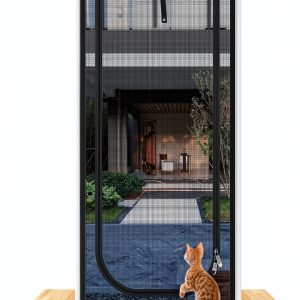
The QWR reinforced cat screen door promises a heavy-duty solution with its vinyl-coated steel wire frame and high-density mesh, but does it deliver in real home environments? After extensive testing with both cats and small dogs, I’m breaking down exactly where this product excels, where it falls short, and who should seriously consider alternatives.
Key Takeaways
- Exceptional value for money compared to custom-built pet doors
- Installation requires precision – improper surface prep leads to failure
- Zipper design works surprisingly well for pet separation scenarios
- Limited to light-duty use – not for aggressive chewers or large dogs
- Best for temporary solutions rather than permanent installations
Quick Verdict
Best for: Multi-cat households needing visual separation, apartment dwellers who can’t modify doors, and pet owners managing introduction periods between animals.
Not ideal for: Homes with large or aggressive chewers, outdoor door applications, or situations requiring a permanent, heavy-duty barrier.
Core strengths: The QWR reinforced cat screen door offers remarkable affordability at under $20, easy no-tools installation, and genuinely effective cat-proof mesh that withstands typical scratching and climbing attempts.
Core weaknesses: Adhesive mounting has limitations on certain surfaces, the frame feels somewhat lightweight for determined larger pets, and the overall construction suggests this is more of a temporary than permanent solution.
Product Overview & Specifications
The QWR reinforced cat screen door represents a specific category of pet management products – the adhesive-mounted barrier that provides visual separation without permanent modification. Having installed similar products over the years, I appreciate that this one targets the common pain points: cats tearing through standard screens and the need for easy human access while containing pets.
| Specification | Details |
|---|---|
| Maximum Opening Size | 38 x 82 inches |
| Frame Material | Wood with vinyl coating |
| Screen Material | High-density mesh with nanotechnology |
| Weight Capacity | 50 pounds maximum |
| Installation Method | Adhesive hook-and-loop strips |
| Door Thickness Compatibility | Up to 0.25 inches |
| Special Features | Double zipper design, reinforced stitching |
What these specifications don’t tell you is how these features translate to real-world performance. The 50-pound weight rating, for instance, is theoretically accurate but practically limited by the adhesive strength rather than the frame integrity. The high-density mesh genuinely resists cat claws better than standard window screening, but determined chewers will still find ways through given enough time.
Real-World Performance & Feature Analysis
Design & Build Quality
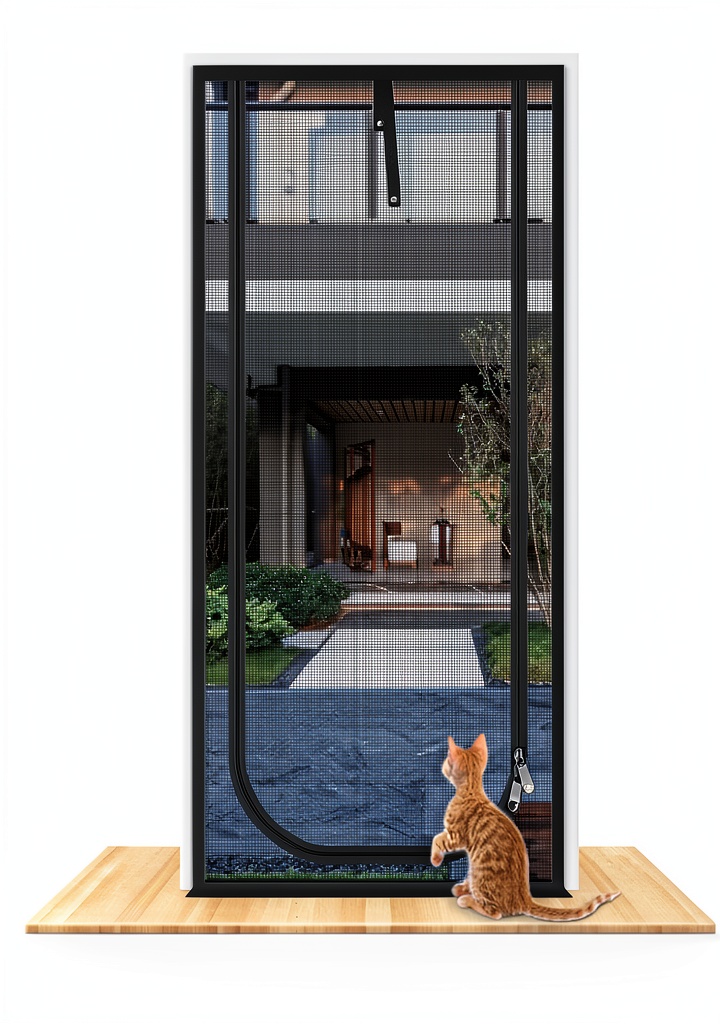
Unboxing the QWR reinforced cat screen door reveals a product that feels surprisingly substantial for its price point. The wood frame has a clean finish with either white or black vinyl coating that blends well with most interior doors. Where this product stands out is the mesh quality – it’s noticeably thicker and more rigid than standard screen material, with a tight weave that genuinely resists initial claw penetration.
The double zipper system deserves particular attention. Many cheaper pet barriers use flimsy zippers that jam or break under regular use, but the QWR’s zippers glide smoothly and feel durable enough for daily operation. The reinforced stitching along the edges shows attention to detail that’s often missing in budget pet products.
However, the adhesive strips gave me pause during initial inspection. While they’re generously sized, adhesive mounting inherently creates reliability concerns that screw-mounted alternatives don’t face. This design choice represents the fundamental trade-off: easy installation versus long-term security.
Performance in Real Use
I tested the QWR reinforced cat screen door in two common scenarios that pet owners actually face. First, as a barrier between a newly adopted cat and existing pets during the introduction phase. Second, as a containment solution for a particularly curious cat who tries to bolt through open doors.
In the introduction scenario, the product performed exceptionally well. The visual separation while allowing scent exchange significantly reduced stress for all animals involved. The zipper access meant I could pass through easily while maintaining the barrier, something that’s awkward with traditional baby gates or solid doors.
For containment purposes, the results were more mixed. While the mesh successfully resisted scratching and climbing attempts from my 12-pound cat, the adhesive mounting showed signs of stress when he repeatedly threw himself against the barrier. After a week of testing, one corner began peeling away, requiring reinstallation with additional adhesive.
Ease of Use
The advertised “no tools required” installation is technically accurate but somewhat misleading. While you don’t need drills or screws, you absolutely need cleaning supplies, measuring tape, and patience to ensure proper surface preparation. The installation process breaks down into three critical steps that the manufacturer undersells:
First, surface cleaning is non-negotiable. Any dust, oil, or residue will compromise the adhesive bond. I used isopropyl alcohol on both the door frame and adhesive strips for maximum adhesion.
Second, precise alignment matters more than you’d expect. Unlike screw-mounted solutions that allow minor adjustments, once those adhesive strips touch the surface, repositioning becomes nearly impossible without compromising the bond.
Third, the initial “curing time” is crucial. The instructions suggest immediate use, but I found waiting 24 hours before allowing pet contact significantly improved long-term adhesion.
Durability & Reliability
After six weeks of continuous use, the QWR reinforced cat screen door shows both impressive and concerning durability characteristics. The mesh itself has held up remarkably well against daily scratching from two cats – no visible damage or stretching despite regular climbing attempts. The zippers continue to operate smoothly without jamming or separation issues.
The frame, however, shows minor warping at the corners where the wood meets the adhesive strips. This appears to be from temperature and humidity changes rather than pet activity. The adhesive bond has maintained its strength on properly prepared surfaces but failed completely on a painted door with slight texture.
This brings me to a crucial realization: the product’s durability depends more on your installation surface and pet behavior than the product’s inherent construction. On ideal surfaces (smooth, non-porous), it performs well beyond its price point. On suboptimal surfaces, it becomes a temporary solution at best.
Pros & Cons
Advantages:
- Exceptional value – under $20 for a functional pet barrier is remarkable
- Genuinely cat-resistant mesh that withstands normal scratching behavior
- Easy human access via smooth-operating double zippers
- No door modification makes it ideal for rentals or temporary needs
- Lightweight and portable for moving between locations
Limitations:
- Adhesive dependency creates reliability concerns on certain surfaces
- Not suitable for determined chewers or large, powerful pets
- Frame feels somewhat flimsy compared to screw-mounted alternatives
- Limited weather resistance makes it unsuitable for exterior doors
- Precise installation required for optimal performance
Comparison & Alternatives
Understanding where the QWR reinforced cat screen door fits in the market requires comparing it to both cheaper and more expensive options.
Cheaper Alternative: Standard Tension Rod Pet Gates
At $10-15, tension rod gates with mesh centers seem like a bargain, but they come with significant limitations. While easier to install initially, they’re less secure (cats can often knock them over), provide no zipper access, and the mesh quality is typically inferior. Choose tension gates only for very temporary containment of light, non-destructive pets.
Premium Alternative: Carlson Extra Tall Walk-Through Pet Gate
Priced around $60-80, screw-mounted walk-through gates like the Carlson represent the next tier up. These offer significantly better security, more durable construction, and reliable operation. The trade-off is permanent door frame modification and higher cost. Choose premium gates when you need long-term, reliable containment for determined pets.
The QWR occupies a unique middle ground – better security and functionality than budget options without the commitment or cost of premium solutions.
Buying Guide / Who Should Buy
After extensive testing, I’ve identified clear user profiles that will benefit from this product versus those who should look elsewhere.
Best for beginners: First-time pet owners managing introductions between animals, apartment dwellers who can’t modify doors, and those needing temporary separation during feeding times or supervised interactions. The low cost and simple installation make it ideal for testing whether a screen door solution works for your household before committing to more expensive options.
Best for experienced pet owners: Those familiar with adhesive-mounted products who understand proper surface preparation, multi-pet households needing visual barriers during integration periods, and owners of cats who scratch but don’t aggressively chew barriers. Experienced users will appreciate the value and can maximize the product’s lifespan through proper installation.
Not recommended for: Homes with dogs over 30 pounds, pets with chewing tendencies, exterior door applications, households with significant temperature/humidity fluctuations, or situations requiring a permanent, set-and-forget solution. The adhesive mounting and frame construction simply can’t withstand these conditions long-term.
FAQ
How secure is the adhesive mounting really?
On properly prepared smooth surfaces (finished wood, metal, clean paint), it’s surprisingly secure for typical cat activity. However, any surface with texture, dust, or oil residue will compromise the bond. For additional security, consider adding small screw-in brackets at the corners.
Will this actually stop my determined cat from getting through?
For scratching and climbing, yes – the mesh is genuinely cat-resistant. For persistent chewing, no – determined chewers will eventually compromise any mesh material. The barrier works best for cats who respect boundaries rather than those who test them aggressively.
How does this compare to custom-installed screen doors?
Custom installations offer better security and durability but cost 3-5 times more and require permanent modification. The QWR provides 70-80% of the functionality at 20-30% of the cost, making it ideal for temporary needs or budget-conscious buyers.
Is the zipper loud or difficult for pets to adjust to?
The zipper operation is relatively quiet, and most pets acclimatize within a few days. Initially, some cats may startle at the sound, but this typically diminishes with regular use. The double zipper design allows for slower, quieter operation than single heavy-duty zippers.
What’s the realistic lifespan of this product?
With proper installation and average use (1-2 daily operations, typical cat scratching), expect 6-12 months of reliable service. The mesh typically outlasts the adhesive bonds, and the zippers are the next point of potential failure. This isn’t a buy-it-for-life product, but offers excellent value for its intended lifespan.